Every felled tree leaves a souvenir. Mow around it for a few years and it becomes a trip hazard, a lawnmower blade’s worst enemy and, if it was a gum or a wattle, a fresh crop of shoots every spring. The good news: a stump grinder can make it disappear in minutes. The catch: picking the wrong machine, or the wrong approach, can turn a tidy job into a sore back, a broken grinder or a stump that grows straight back.
Quick answer: A stump grinder is a machine with a spinning, toothed cutting wheel that chips a stump away to below ground level, commonly around 200 to 300 mm deep. In South Africa, professional stump grinding usually costs about R800 to R5,000 per stump, roughly R1,100 for a 0.5 m stump and R1,700 for a 1 m stump on published price guides. Hiring a grinder yourself suits a few small, easy-to-reach stumps. Big stumps, lots of stumps, gums and wattles, and anything close to buildings or underground services are a job for an experienced crew.
- What a stump grinder is and how it works
- Types of stump grinders
- Grinding vs removal vs other options
- What stump grinding costs in South Africa
- DIY grinder hire or a professional crew?
- Should you buy a stump grinder?
- How stump grinding works, step by step
- Safety: the non-negotiables
- Gum and wattle stumps: why they come back
- After grinding: chips, holes and replanting
- Stump grinding in Piet Retief and Mkhondo
- Frequently asked questions
What is a stump grinder and how does it work?
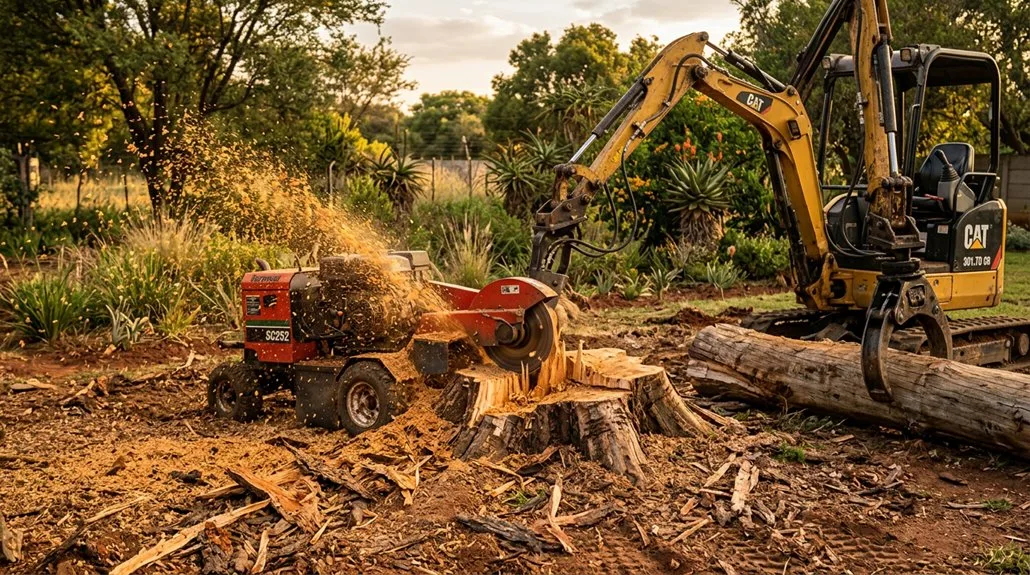
A stump grinder removes a tree stump with a rotating cutting disc fitted with hardened teeth. The operator sweeps the spinning wheel from side to side across the stump, lowering it a little with each pass, while hydraulic cylinders move the cutting head sideways and up and down. The wood leaves the stump as chips, and the hole fills with a mix of chips and soil.
Unlike digging a stump out, grinding leaves the main roots in the ground to rot away slowly. That makes it fast, tidy and far less destructive to lawns, paving and nearby pipes.

Types of stump grinders
Stump grinders range from machines you can wheel through a garden gate to tracked monsters that clear plantation blocks. The model names below are examples listed for sale in South Africa, to show what each class looks like.
| Type | Example | Best for | Good to know |
|---|---|---|---|
| Compact walk-behind | 15 hp petrol machine with about 235 mm cutting depth | One to a few small or medium garden stumps | Fits through many gates; slow on big hardwood stumps |
| Tracked mid-size | Vermeer SC30TX: about 703 kg and 25 hp | Bigger stumps, slopes, several stumps in a day | Tracks spread the weight; needs a trailer to move |
| Towable or wheeled pro machine | Rayco RG13 | Tree fellers and contractors doing stumps daily | Much faster, but heavier and harder to place in small gardens |
| Large self-propelled or tracked | Predator 50RX, Bandit SG75 | Big gums, farms, plantation edges, many stumps | Professional operators only |
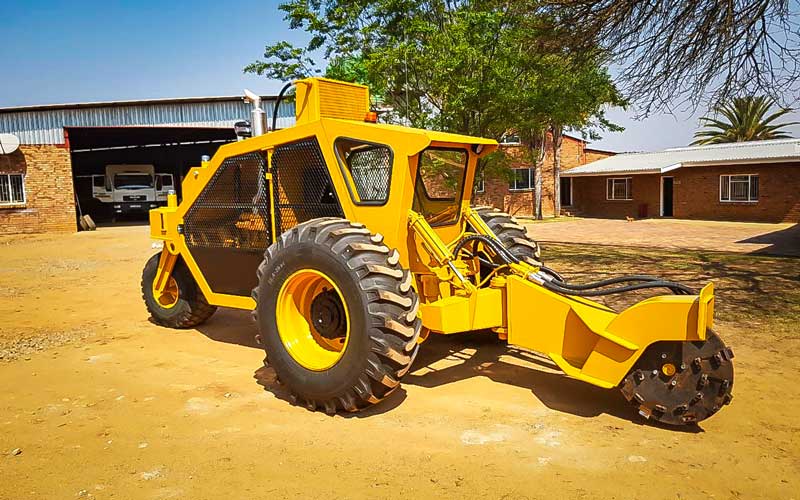
| Machine-mounted attachments | Grinder or destumper on an excavator or skid steer | Land clearing, rows of stumps, rough ground | Uses the carrier machine’s power and reach |
Specs from the Vermeer SC30TX listing at Jos Hire and stump grinders for sale on MarketBook South Africa.
Stump grinding vs full removal vs other options
Grinding is not the only way to get rid of a stump, but it is usually the quickest that does not tear up the garden. Here is how the options compare.
| Method | Roots | Speed | Mess | Plant in the same spot? | Best for |
|---|---|---|---|---|---|
| Stump grinding | Left to rot | Minutes to an hour per stump | Chips, little damage | Lawn and small plants, yes; a new tree, better offset | Gardens, lawns, near paving |
| Full removal (excavator or TLB) | Pulled out | Fast with the right machine | Big hole, disturbed soil | Yes, after backfill | Building sites, farmland, replanting rows |
| Rotting it out | Rot slowly | Years | None, but the stump stays | Not for a long time | Out-of-the-way corners |
| Burning | Partly | Slow and smoky | Fire risk, smoke | Eventually | Rarely a good idea: check fire rules and bylaws first |
| Leaving it | Alive (some species) | None | Trip hazard, regrowth | No | Nowhere, honestly |
For a deeper look at the two main options, read stump grinding vs full stump removal. If you are clearing whole fields rather than a few stumps, our guide to the best land clearing machines compares excavators, dozers, TLBs and mulchers.
What does stump grinding cost in South Africa?
Most South African tree and stump services quote per stump, with discounts when there are several. Big clearing jobs on farms and plantations are usually quoted per hour or per day instead. Published price guides from South African tree-felling companies put typical prices here:
| Stump diameter | Typical price (easy access) |
|---|---|
| About 0.5 m | Around R1,100 |
| About 1 m | Around R1,700 |
| About 2 m | Around R3,350 |
| Overall range per stump | About R800 to R5,000 |
Notice that a stump twice as wide does not cost twice as much. Getting the machine there and set up is a big part of the price, so the cost per stump drops sharply when you have several. Treat these figures as a guide. Rural travel distance, hardwood species and difficult access can all push a quote up.
What pushes the price up or down
| Factor | Why it matters |
|---|---|
| Diameter and height | More wood to grind; tall stumps need cutting down first |
| Species | Dense hardwoods and big gums grind slower than pine |
| Access | Steps, narrow gates and slopes may need a smaller, slower machine |
| Stones, rubble and wire | Hidden objects wreck grinder teeth and slow the job |
| Number of stumps | Setup is shared, so each extra stump costs less |
| Surface roots | Chasing roots across a lawn adds time |
| Chips and clean-up | Removing chips and backfilling with soil may be extra |
| Distance | Travel time to rural sites is part of the quote |
We break the numbers down further, including DIY hire rates, in our guide to stump grinder hire costs in South Africa.
DIY stump grinder hire or a professional crew?
Hiring a grinder looks like the cheap option, and sometimes it is. Published South African guides put DIY grinder hire at roughly R1,500 to R4,500 a day, depending on the machine. Here is an honest way to decide.
| Your situation | DIY hire | Professional crew |
|---|---|---|
| One or two small, soft stumps in open lawn | Good fit | Also fine, little difference in price |
| Stumps wider than about 50 cm | Hard work with a compact machine | Better choice |
| Gum, wattle or other hardwood | Slow, and regrowth needs follow-up | Better choice |
| Close to walls, paving, pipes or cables | Risky | Better choice |
| Slopes or steps | Risky with a heavy walk-behind | Better choice |
| Ten stumps or more, or farm clearing | Exhausting | Far better value |
| You have a trailer, PPE and a free weekend | Possible | Still faster |
Reality check: a compact grinder weighs hundreds of kilograms, kicks against hard roots and throws chips and stones. Add the trailer, the fuel, a day of grinding and replacing broken teeth, and the “cheap” DIY job often costs about the same as getting a crew in. If you do go DIY, our guide on how to book a stump grinder walks you through choosing the right size.
Should you buy a stump grinder?
If you have a farm, a landscaping business or a long list of stumps, buying can make sense. These are examples of asking prices listed on MarketBook South Africa at the time of writing. Listings change, so treat them as a snapshot.
| Machine | Condition | Listed price |
|---|---|---|
| Crytec CRSG150-R compact petrol (15 hp, 235 mm depth) | 2025 model | R26,213 |
| Rayco RG13 II wheeled | 2024 | R148,725 |
| Vermeer SC30TX tracked | Used (2021) | R279,683 |
| Predator 50RX tracked | Used (2017, 1,450 hours) | R393,749 |
| Bandit SG75 tracked | Used (2023, 180 hours) | R1,096,795 |
Do the maths: at around R1,700 a stump, a compact grinder pays for itself after about 15 medium stumps. That ignores teeth, servicing, transport and your own time, and a compact machine will struggle with big gums. For most homeowners and many farmers, paying per stump or hiring as needed is cheaper. The same logic applies to bigger plant, which we cover in our hire vs buy guide.
How stump grinding works, step by step
Whether you hire a machine or a crew, this is what a good job looks like:
- Check for services. Find out where water pipes, cables and irrigation lines run before anything starts.
- Clear the area. Remove stones, wire, bricks and anything else that could be thrown or damage the teeth.
- Cut the stump low. A chainsaw cut close to the ground saves grinding time.
- Gear up and set an exclusion zone. Keep people, pets and cars well away from the machine.
- Grind in shallow passes. Sweep the wheel across the stump, lowering it a little at a time, working from the edge inwards.
- Go deep enough. For lawn, grinding a few hundred millimetres below ground is usually enough; ask for deeper if you will build or pave there.
- Chase surface roots. Grind out roots that would lift the lawn or trip people.
- Clear and backfill. Rake out most chips, fill with topsoil and allow for settling.
Safety: the non-negotiables
Stump grinders are loud and throw debris. A typical compact hire machine is rated at about 104 dB and needs helmet, eye, ear and foot protection.
| Protection | Why |
|---|---|
| Eye and face protection | Chips and stones leave the wheel at speed |
| Hearing protection | Around 104 dB on compact machines |
| Safety boots | Heavy machine, spinning cutter near your feet |
| Gloves and long trousers | Flying debris and sharp teeth |
| Exclusion zone | Keep bystanders, children, pets and vehicles well back |
Never grind near unmarked cables or pipes, never reach towards the cutter while it is spinning, and stop the machine before clearing chips. If a stump sits against a wall, a driveway or a septic tank, call a professional.
Gum and wattle stumps: why they come back
Here in Mkhondo, plantation country, a lot of stumps are gums (eucalyptus), wattle and pine. Pine stumps do not resprout. Gums and wattles are a different story.
Many eucalypts send up new shoots from a cut stump. South Africa’s forestry industry even uses this on purpose: commercial eucalypt stands are often regenerated from coppice shoots instead of being replanted. Research from KwaZulu-Natal found that stumps coppiced over several rotations become large, multi-stemmed and difficult to kill. Grinding below the growth point helps a lot, but for stubborn gums and wattles it often needs a follow-up.
The legal side
Several gum and wattle species are listed under the Alien and Invasive Species Regulations of the Biodiversity Act (NEMBA). Depending on the species and where it grows, landowners may have to control it, or make sure it does not spread beyond permitted areas. invasives.org.za explains the categories, and the Working for Water control guidelines describe cut-stump treatment with registered herbicides, applied strictly according to the label.
For whole blocks of regrowth or brush, a mulcher is often faster than grinding stump by stump. See forestry mulcher hire for big clearing jobs and weekend mulcher hire for smaller properties.

After grinding: chips, holes and replanting
- Use the chips, but not in the hole. Arborist wood chips make one of the best mulches for trees and shrubs, according to Washington State University Extension. Spread them on beds rather than burying them under new lawn.
- Keep chips on top, not mixed in. Wood chips used as mulch do not rob the soil of nitrogen, but chips dug into the soil can. So rake most chips out of the hole and backfill with topsoil before you plant.
- Expect settling. As the remaining roots rot, the patch can sink. Top it up with soil after a season.
- Planting a new tree? Offset it from the old stump, or have the stump removed completely so the new roots have room.
Landscaping the area afterwards? See our guide to landscaping equipment hire for the tools that finish the job.
Stump grinding in Piet Retief, Mkhondo and surrounds
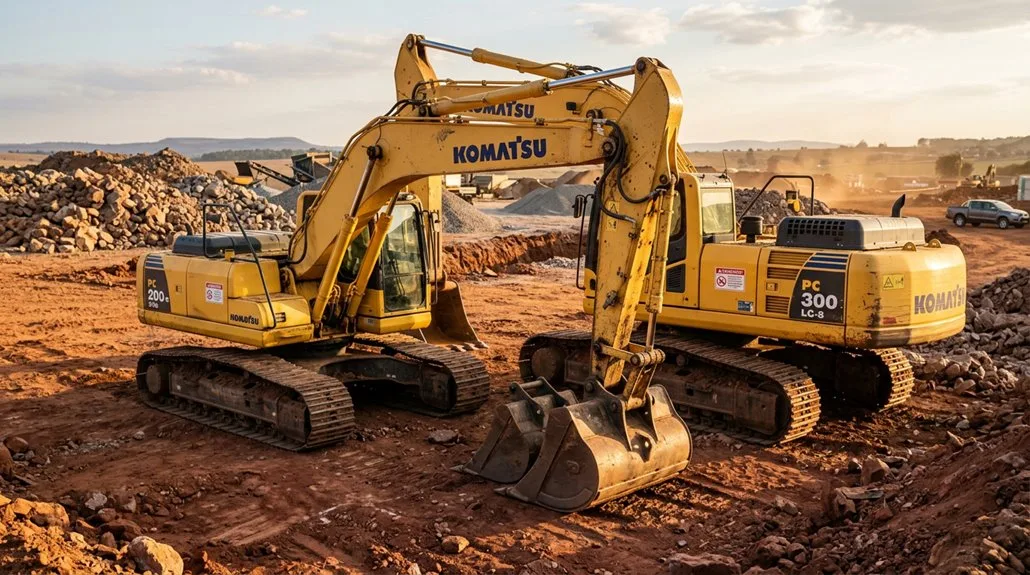
At Bendet we run our own self-propelled stump grinder, and for bigger clearing jobs we use excavators fitted with a destumper or work with TLBs to pull stumps and roots out completely. That means we can handle a single stump in a garden, a row of gums along a farm road or forestry land being prepared for replanting.

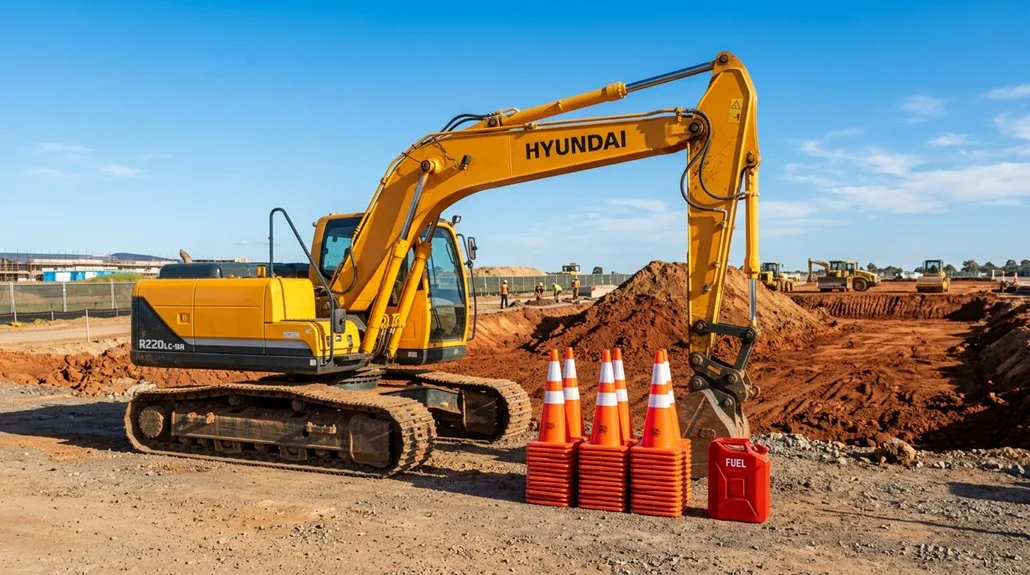
We usually quote per stump for gardens and per hour for larger jobs. Send us a few photos with something for scale (a spade works well) and the location, and we will tell you whether grinding or full removal makes more sense. We regularly work in Piet Retief, Paulpietersburg, Ermelo, Pongola and northern KwaZulu-Natal. Need a machine for the rest of the job too? Our excavator hire guide explains which size suits land clearing and dams.
Got stumps? Get them gone. Call 076 202 9021, WhatsApp us your stump photos, or request a quote online. Find out more about our stump grinding and stump removal service in Piet Retief.
Frequently asked questions
How much does stump grinding cost in South Africa?
Most stump grinding services charge per stump: around R1,100 for a 0.5 m stump, around R1,700 for a 1 m stump and about R3,350 for a 2 m stump on published South African price guides, with an overall range of roughly R800 to R5,000. Several stumps on one site cost less each, and big clearing jobs are usually quoted per hour.
How much does it cost to hire a stump grinder per day?
Published South African guides put DIY stump grinder hire at roughly R1,500 to R4,500 a day, depending on the size of the machine. Add transport, fuel, replacement teeth and protective gear when you compare it with a professional quote.
How deep does a stump grinder go?
Compact petrol grinders are typically rated to grind about 235 to 250 mm below ground, and professional machines can go deeper. A few hundred millimetres is usually enough for lawn; ask for deeper grinding if you plan to build or pave over the spot.
Is stump grinding better than stump removal?
Grinding is faster, cheaper and far less disruptive, because the roots stay in the ground and rot away. Full removal with an excavator or TLB is better when you need the roots out, for example before building, paving or replanting in exactly the same spot.
Will a gum or wattle stump grow back after grinding?
It can. Many eucalypts and wattles resprout from the stump. Grinding well below the surface helps, but stubborn stumps often need follow-up, such as removing new shoots or a cut-stump treatment with a registered herbicide applied according to the label.
Can I plant grass where a stump was ground?
Yes. Rake out most of the wood chips, fill the hole with topsoil, let it settle and then plant. Avoid burying a thick layer of fresh chips under the new lawn.
How long does it take to grind a stump?
A small garden stump can take only minutes with the right machine, while a large hardwood stump with surface roots can take an hour or more. Rocks, wire and difficult access slow things down.
Do you grind stumps around Piet Retief?
Yes. We grind and remove stumps in Piet Retief, Mkhondo, Paulpietersburg, Ermelo, Pongola and northern KwaZulu-Natal, from single garden stumps to farm and plantation clearing. Call 076 202 9021 or WhatsApp photos for a quote.
More stump and land clearing guides
- Stump grinder hire cost in South Africa
- How to hire a stump grinder: step-by-step booking guide
- Stump grinding vs stump removal: cost and method
- Land clearing machines: which equipment works best?
- Forestry mulcher hire: requirements, costs and safety
- Weekend mulcher hire: can you rent one for two days?
- Excavator hire in South Africa: sizes, rates and tips
Sources and further reading
- Stump grinder (Wikipedia)
- NEMBA Alien and Invasive Species Regulations, 2014 (Government Gazette)
- Invasive species categories and permits (invasives.org.za)
- Working for Water: control methods (Department of Water and Sanitation)
- Killing Eucalyptus grandis cut stumps after multiple coppice rotations (Southern Forests)
- Using arborist wood chips as landscape mulch (Washington State University Extension)
- Myths of mulch (University of California)