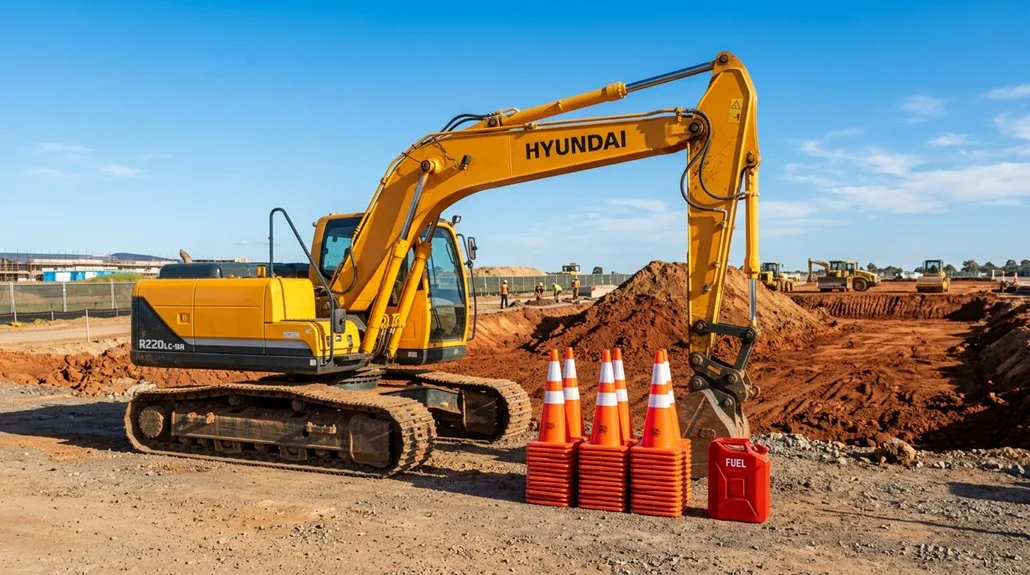
Should you hire construction plant or buy your own machines? For most contractors, farmers and developers in South Africa the answer comes down to one number: utilisation – how many days a year the machine will actually work. If an excavator or TLB will be busy most working days for several years, buying can pay off. If it will stand between jobs, hiring is almost always cheaper once you count every cost of ownership.
This guide compares hiring and buying construction plant on upfront cost, running costs, flexibility, risk and tax, so you can make the right call for your business.
Key takeaways
- Buying only makes financial sense when a machine is used heavily and consistently for years.
- Ownership costs go far beyond the purchase price: finance, insurance, maintenance, tyres, transport, licensing, storage and an operator.
- Hiring turns plant into a predictable operating cost and lets you pick the right machine for each job.
- Many businesses own the one or two machines they use daily and hire everything else.
The real cost of owning plant
The purchase price of a new 20-ton excavator or TLB is only the start. Owners also carry finance charges or the opportunity cost of tied-up capital, comprehensive insurance, scheduled services and wear parts (undercarriage, buckets, teeth, tyres), unplanned repairs, transport on a lowbed between sites, secure storage, licensing for road-going machines and the wages of a trained operator. On top of that, machines lose value every year whether they work or not.
When a hire company quotes a day rate, all of those costs are already built in and spread across many customers. You pay only for the days you use.
Utilisation: the deciding factor
A simple test is to estimate how many days a year the machine will genuinely be working on paying jobs:
- Low use (under about 100 days a year): hiring is clearly cheaper – the machine would spend most of its life standing.
- Medium use (100–180 days): run the numbers carefully. Hiring usually still wins once breakdowns, transport and operator costs are included.
- High, steady use (180+ days for several years): owning may be cheaper, provided you have the workshop support and cash flow to keep the machine productive.
Flexibility and the right machine for each job
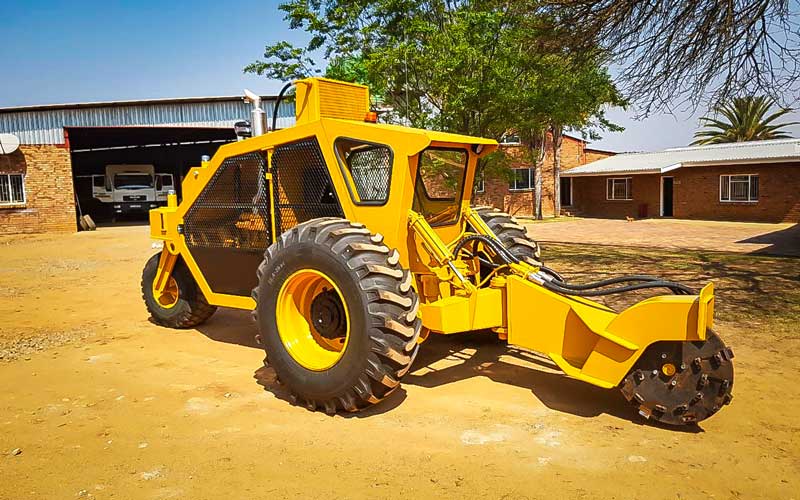
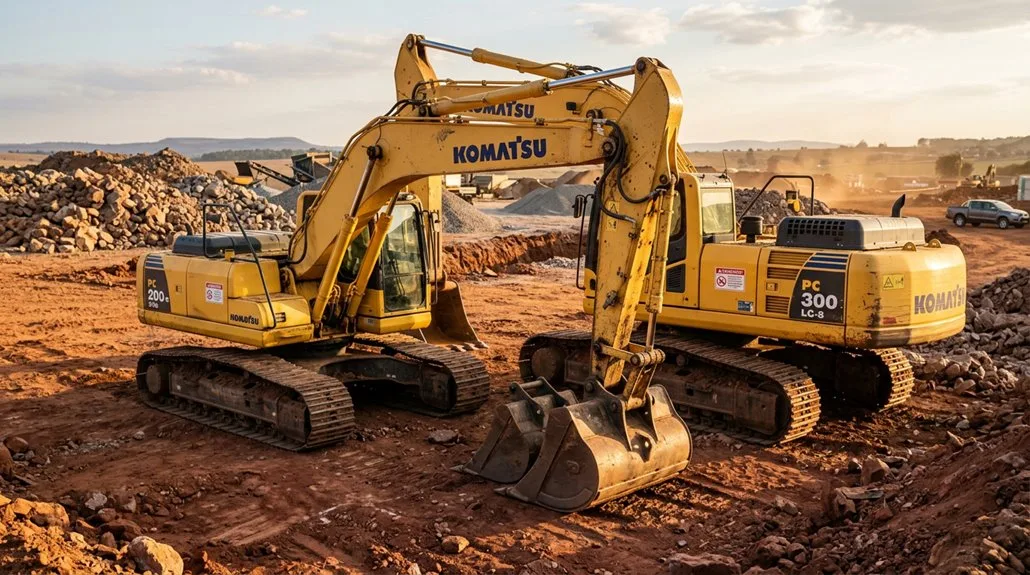
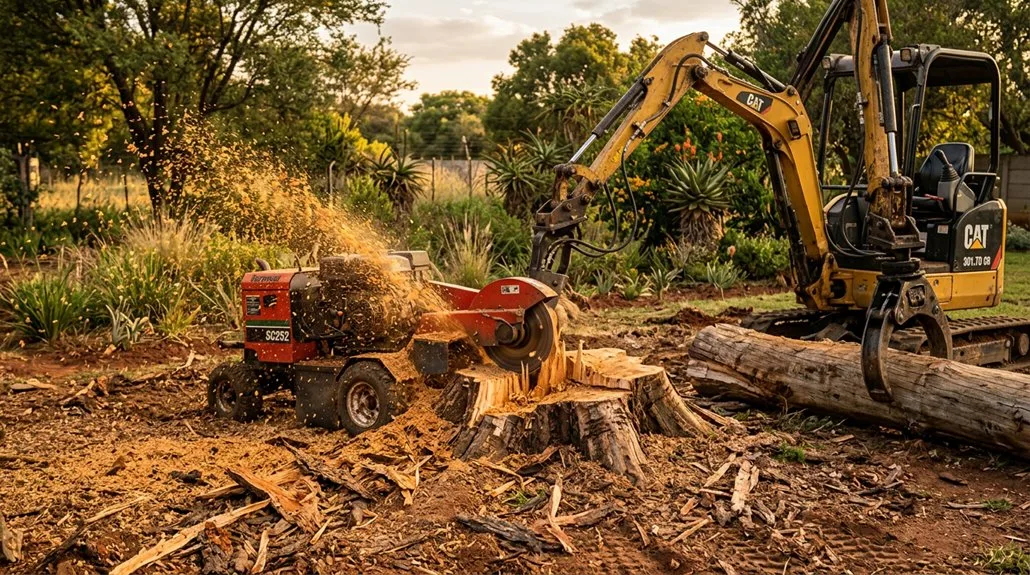
Projects rarely need the same machine twice. One month you need a 30-ton excavator for bulk earthworks, the next a TLB for trenches, a roller and a water cart for a road layer, or a stump grinder for land clearing. Hiring lets you match the machine to the task instead of forcing the one you own to do work it is not suited to – which is slower and harder on the machine.
Maintenance, breakdowns and downtime
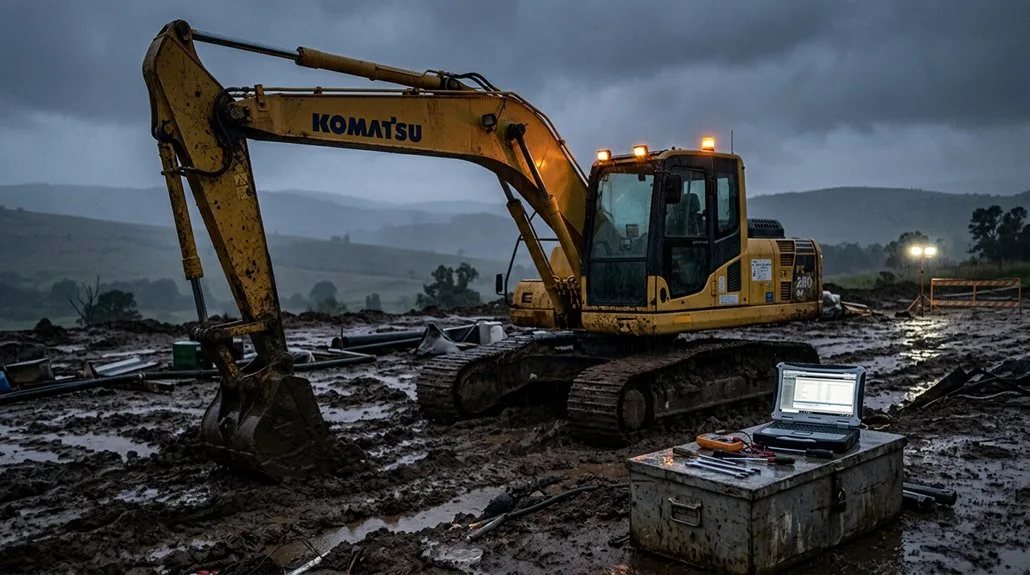
When an owned machine breaks down, the repair bill and the lost production are both yours. With hire, the supplier is responsible for servicing and repairs, and a reputable company will repair or replace a machine quickly so your project keeps moving. Daily operator checks are still important – see our TLB maintenance and daily checks guide for what that involves.
Cash flow and tax
Buying ties up capital or adds debt to your balance sheet. Hire charges are usually treated as a normal operating expense, which keeps cash free for labour, materials and growth. Owned machines can be written off over time through wear-and-tear allowances. The right treatment depends on your business structure, so speak to your accountant or tax practitioner before deciding.
Compliance and operators
Whether you hire or buy, plant must be operated by competent, authorised people and kept in a safe condition under the Occupational Health and Safety Act. When you own the machine, that responsibility – including operator training and record keeping – sits entirely with you. Hiring with an operator moves much of it to the supplier. Our guide to plant hire with or without an operator explains the options.
Hire vs buy at a glance
| Factor | Hire | Buy |
|---|---|---|
| Upfront cost | None | High (cash or finance) |
| Maintenance and repairs | Supplier’s responsibility | Your responsibility |
| Machine choice | Right machine for each job | Limited to what you own |
| Downtime risk | Supplier replaces or repairs | Lost production is yours |
| Best for | Variable or project-based work | High, steady utilisation |
So, should you hire or buy?
Own the machines that work every day and are core to your business, and hire the rest – specialist machines, extra capacity for busy periods and anything you need for only a few weeks. If you are unsure what a hire would cost compared with owning, our guide to the difference between plant hire and equipment hire is a good next read, followed by our plant hire cost breakdown.
Bendet Plant & Tool Hire has supplied excavators, TLBs, tippers, rollers and water carts to contractors, farmers and forestry operations around Piet Retief and Mkhondo since 2011. For a hire quote you can compare against the cost of buying, see our plant hire services or call 076 202 9021.