Your diesel cart keeps everything moving—until it doesn’t. One small leak, and your entire operation grinds to a halt. Tank failures rarely strike without warning; they creep in slowly, dropping hints most people miss until it’s too late. Consider this: a single gallon of spilt diesel can contaminate 750,000 gallons of water. That’s not just a mistake—it’s a disaster waiting to happen, one that drains your wallet and your reputation. So where do these leaks actually begin? The answer might surprise you.
Where Diesel Bowsers Actually Spring Leaks
Because a bowser combines a tank, pump, hoses, and fittings into one mobile unit, it has more failure points than a fixed storage tank. Your crew relies on this equipment daily, so knowing where diesel cart leaks start keeps everyone safer and on schedule.
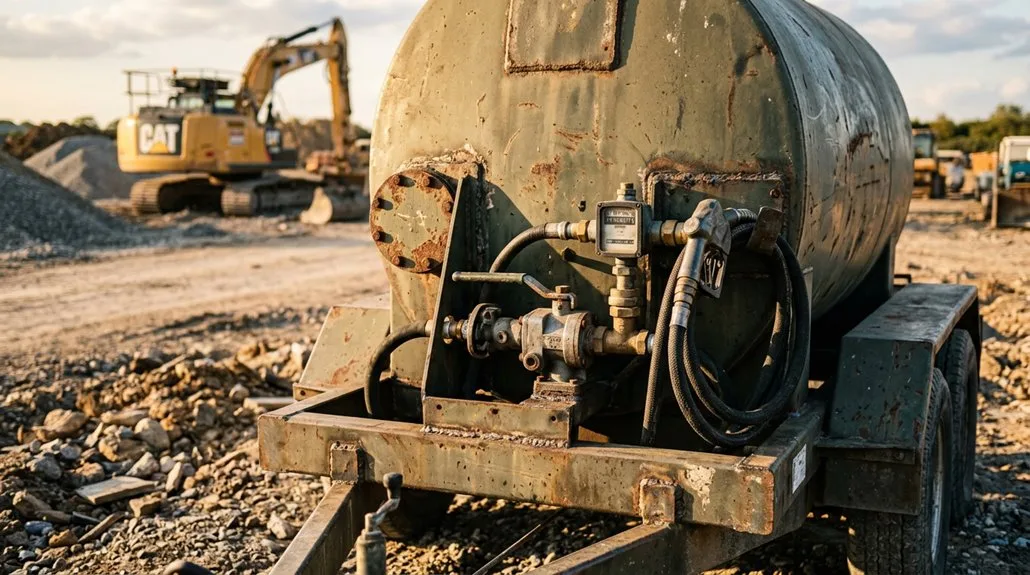
Most leaks begin at connections, not the tank shell itself. Loose couplings, worn gaskets, and cracked hose swivels account for the majority of reported cases. Vibration from towing and rough terrain loosens fittings over time.
Connections fail before tanks do—loose couplings and worn gaskets cause most leaks, worsened by towing vibration.
Corrosion causes the second most common leak type. Pinholes form where coatings fail, especially near seams and welds.
Check these specific points weekly:
- Hose connections and swivels
- Cap seals and access points
- Valve packing and gauge fittings
- Mounting brackets under stress
Reputable hire companies rely on continuous investment in equipment to keep bowsers and their fittings in leak-free condition before they ever reach a job site.
Your team’s diligence here prevents bigger problems later.
Your Daily Pre-Fuelling Leak Inspection Checklist
Now that you know where leaks typically start, you need a system to catch them before they become a problem. A daily checklist keeps your crew consistent, and consistency builds trust across your team.
Before you start fuelling, run through this three-step check:
- Look: Scan the tank, hoses, and fittings for wet spots, drips, or stains.
- Smell: Check seams and caps for fresh diesel odour.
- Touch: Confirm connections and clamps are tight, not loose or corroded.
This routine takes minutes but prevents costly downtime. Skipping it puts your whole operation at risk.
Our team relies on a meticulously maintained equipment fleet to ensure every bowser stays safe and efficient for daily use.
Good diesel bowser maintenance isn’t optional; it’s the standard your team relies on every single day.
Weekly, Monthly, and Quarterly Leak Checks That Catch Problems Early
While daily checks catch the obvious problems, longer-interval inspections catch what daily glances miss. Your crew relies on you to run these checks consistently, and that consistency builds trust across the team.
Weekly walk-arounds cover leak checks, spill kit condition, and equipment damage. This 10-minute routine keeps small issues from becoming big ones.
Monthly checks focus on the bund or containment area. Inspect signage, fire equipment, and water accumulation. Standing water signals drainage problems that need attention.
Quarterly inspections dig deeper. Check vents, seals, hoses, valves, gauges, and electrical equipment. These components wear gradually, and quarterly timing catches degradation before failure.
Together, these intervals support preventing fuel contamination by catching sediment, water ingress, and seal wear early. Your team depends on this shared discipline.
What to Do the Moment You Spot a Leak
All those scheduled checks exist for one reason: catching a leak before it becomes a fire hazard or environmental incident. When you find one, act fast. Your team relies on you to follow the same steps every time.
- Stop and isolate. Shut down the cart or bowser immediately. Cut off the source before more diesel escapes.
- Contain the spill. Grab absorbent pads or drain pans. Keep fuel away from drains and soil.
- Secure the area. Remove ignition sources. Confirm bonding and earthing stay intact.
Once contained, repair or replace the failed part.
Do not return the unit to service until it passes a fresh fuel tank inspection. Document everything for your maintenance log.