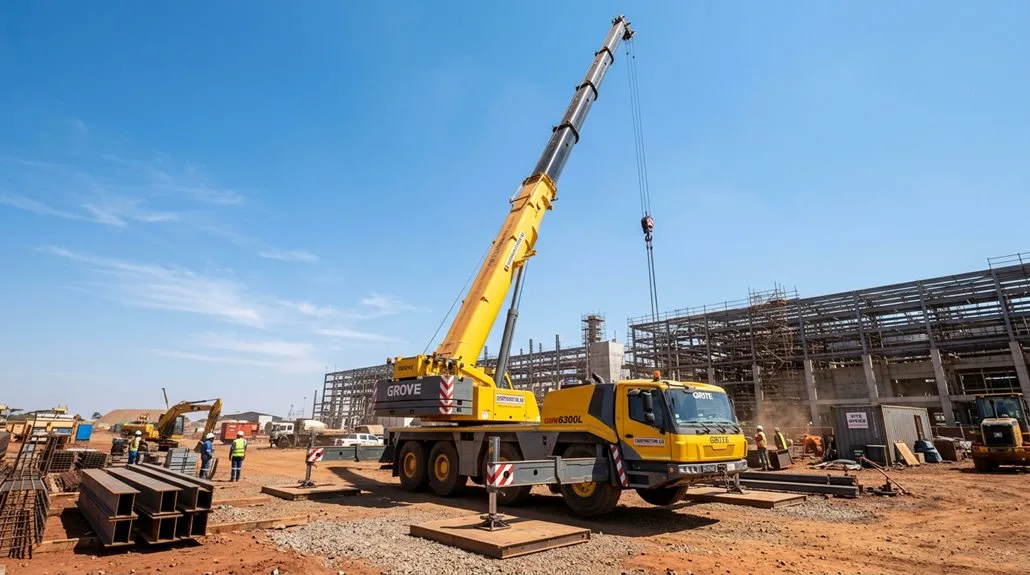
One crane hire company quotes £155 an hour. Another quotes £595 for what sounds like the same job. Neither one is lying to you—and that’s exactly the problem. Mobile crane hire rates swing wildly based on factors most hirers never think to ask about, and picking the wrong option can quietly drain your budget, blow your timeline, or worse, compromise safety on site. Tonnage explains part of the gap. What explains the rest will change how you shop for your next lift entirely.
Mobile Crane Hire Rates by Tonne Class and Capacity
Once you know the tonne class you need, you can narrow down the hourly rate fast. Mobile crane hire rates scale directly with capacity.
You’ll see clear bands across the market:
- 23–30 tonne boom trucks: $155–$175/hour, 3–4 hour minimums, $465–$700 base charge.
- 40–75 tonne cranes: $175–$310/hour, 4-hour minimums, $700–$1,240 base charge.
- 100–210 tonne cranes: $275–$550/hour, 4–8 hour minimums, $1,420–$3,200 base charge.
- 275 tonne cranes: $595/hour flat, 4-hour minimum, $2,380 base charge.
Your project fits somewhere in this line-up. Match your heaviest planned pick to the right class, and you’ll join contractors who budget accurately from the start.
That’s a great result for keeping your project on schedule and on budget.
Why Boom Radius and Lift Geometry Drive Crane Hire Costs
Before you lock in a crane rate, you need to look past the tonne class and study the lift geometry. Boom radius determines how far the crane reaches, and that distance directly shapes crane hire costs. A crane that lifts 50 tonnes at a short radius may only lift 20 tonnes at a longer one. That drop in capacity forces contractors towards bigger, pricier machines.
Smart crews check these factors before booking:
- Maximum boom radius needed for the pick
- Load weight at that specific radius
- Ground conditions supporting outriggers
- Counterweight requirements for the set-up
Reputable hire providers also offer skilled operators who assess these site variables before the crane ever arrives. Understanding this data brings you into a smarter group of planners. You’ll avoid costly surprises and book the right crane the first time, a great result for any job site.
Hourly Crane Hire vs Daily and Weekly Rates
Once you’ve nailed down the boom radius and load weight for your pick, you still need to decide how to structure the rental itself.
Hourly crane hire suits short jobs, but minimum charges apply. A 40–75 tonne crane, for example, carries a 4-hour minimum and a $700–$1,240 base charge.
Daily and weekly rates make more sense as jobs grow. Crews doing heavy plant lifting over multiple days often save money this way:
- 50–70 tonne cranes: $2,400–$4,200 per day, $7,200–$12,600 per week
- 80–110 tonne cranes: $3,800–$7,500 per day, $11,500–$22,500 per week
Providers offering broader plant hire services often bundle cranes with other heavy equipment, which can affect how daily and weekly rates are structured.
Compare all-in costs, not just headline rates.
That’s how experienced crews stay on budget and keep projects on schedule.
The Real Cost of Undersizing Your Crane Hire
When you pick a crane that’s too small for the job, you don’t save money—you create expensive problems. Undersizing forces boom adjustments, added rigging, or a last-minute crane swap. Smart contractors know crane lifting capacities must match the heaviest planned lift, not a rough guess.
Skipping this step often costs more than choosing the right crane from the start:
- Emergency upsizing fees at short notice
- Extended site downtime while crews wait
- Extra mobilisation charges for a second crane
- Safety risks from exceeding rated capacity
A 100-tonne crane hired for a 120-tonne lift isn’t a budget win—it’s a liability. Working with experienced and certified operators from the outset helps ensure the crane’s capacity is matched correctly to the job before it ever reaches the site.
Teams that plan capacity correctly avoid these setbacks and keep schedules intact. Getting this right builds trust with your crew and your client, and that’s a great result worth protecting.