Most contractors pick their plate compactor based on price alone—and pay for that mistake in cracked pavers and blown deadlines. Petrol and diesel machines aren’t interchangeable tools; they’re built with different weight distributions, torque outputs, and fuel appetites that directly affect how well your driveway compacts. One engine type might finish your project in half the time. The other might leave you renting equipment for an extra weekend. Before you commit to either option, you need to know exactly what happens when steel meets soil on a real job site.
Which Plate Compactor Suits Your Paving Job?
How do you know which plate compactor fits your paving job? Start with your site’s scale and layout. The petrol vs diesel compactor choice comes down to weight, power, and duration.
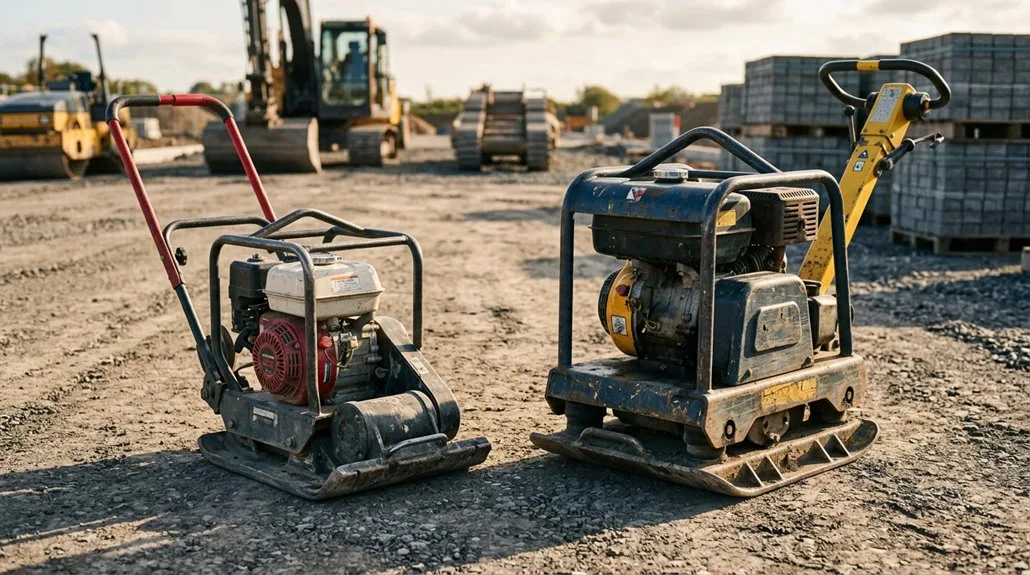
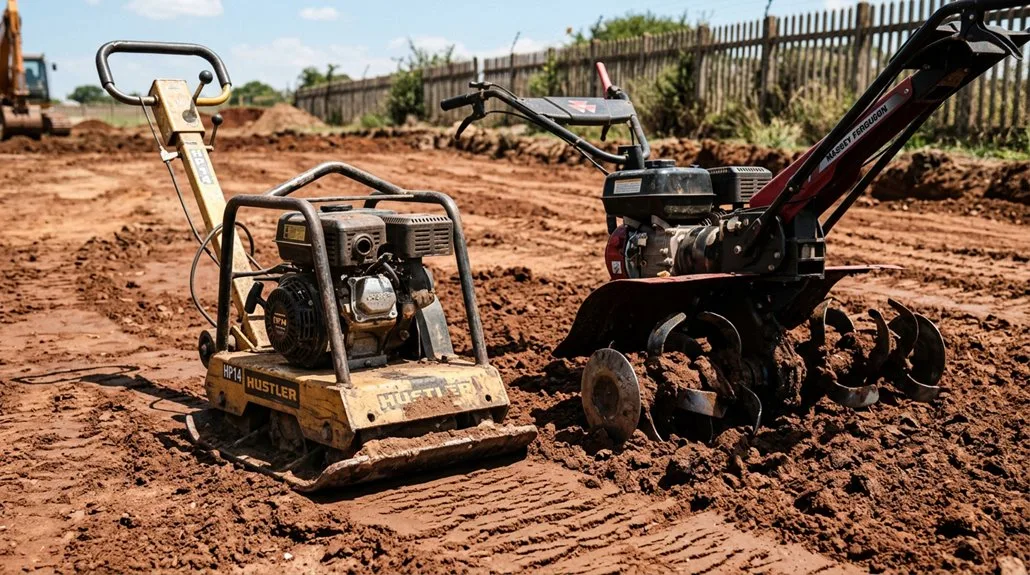
Petrol models work well for driveways, paving stones, and thin base layers. They’re lighter, easier to handle, and simpler to start.
If you’re working on a smaller residential project, petrol gives you a great result without extra bulk.
Diesel models suit deeper layers, roads, and reversible plate work. They deliver stronger torque and hold up during long shifts.
For confined spaces, reversible diesel plates offer better manoeuvrability. Whichever machine you choose, pre- and post-hire checks ensure it performs safely and reliably on site.
Match your machine to the job:
- Short, light paving: petrol
- Deep, heavy-duty compaction: diesel
- Tight access: reversible plates
Petrol vs Diesel Plate Compactors: Power and Weight
Since power and weight decide how a plate compactor performs, these two factors deserve a closer look.
Power and weight aren’t just specs—they’re the foundation of how a plate compactor handles real work.
You’ll find that petrol plate compactors bring lighter frames and easier handling, making them a natural fit for crews who value quick repositioning.
Diesel plate compactors, on the other hand, carry more weight and deliver stronger, sustained force for tougher ground.
Here’s what sets them apart:
- Weight: Petrol units stay lighter for manual transport.
- Torque: Diesel engines sustain higher output over long shifts.
- Compaction force: Heavier diesel plates press deeper layers more effectively.
- Handling: Petrol models suit smaller crews needing frequent repositioning.
Whichever engine type you choose, skilled operators can help ensure the equipment is used safely and efficiently on-site.
Choosing between them means matching your team’s job size, terrain, and daily workload to the right machine.
Fuel Costs for Plate Compactors: Diesel vs Petrol
Weight and power differences matter, but your fuel bill matters just as much over time.
Fuel costs for plate compactors: diesel vs petrol comes down to job length. Diesel engines burn less fuel per hour under sustained load. That efficiency adds up on long shifts and high-volume sub-base work.
Petrol costs more per hour of continuous use. For short jobs, though, this difference stays small. You won’t notice a big gap on a weekend driveway project.
Your compactor selection should match your typical job length, not just upfront machine cost.
Ask yourself:
- How many hours will you run it weekly?
- Is this a one-off task or ongoing work?
Fellow crew members and job-site regulars know: matching fuel type to workload keeps your budget on track.
Maintenance and Starts: Which Engine Wins?
Once you factor in fuel costs, maintenance becomes the next practical concern.
You’ll want reliable maintenance and starts, especially if you’re working alongside a crew that expects the machine ready every morning.
Petrol plate compactor drive systems start more easily and need simpler upkeep.
Diesel units run heavier duty but demand more attention, especially in cold weather.
Here’s what you’re choosing between:
- Petrol: quick pull-start, minimal filter checks, lighter service routine.
- Diesel: stronger torque, but harder cold starts below 5°C.
- Petrol: lower repair costs for small landscaping crews.
- Diesel: filter changes and glow plug checks add upkeep time.
Choose based on your team’s daily demands.
If your own equipment needs servicing beyond routine checks, many providers also offer breakdown and towing services to keep your project on schedule.
Belonging to a crew that values uptime means matching the engine to your real working conditions.