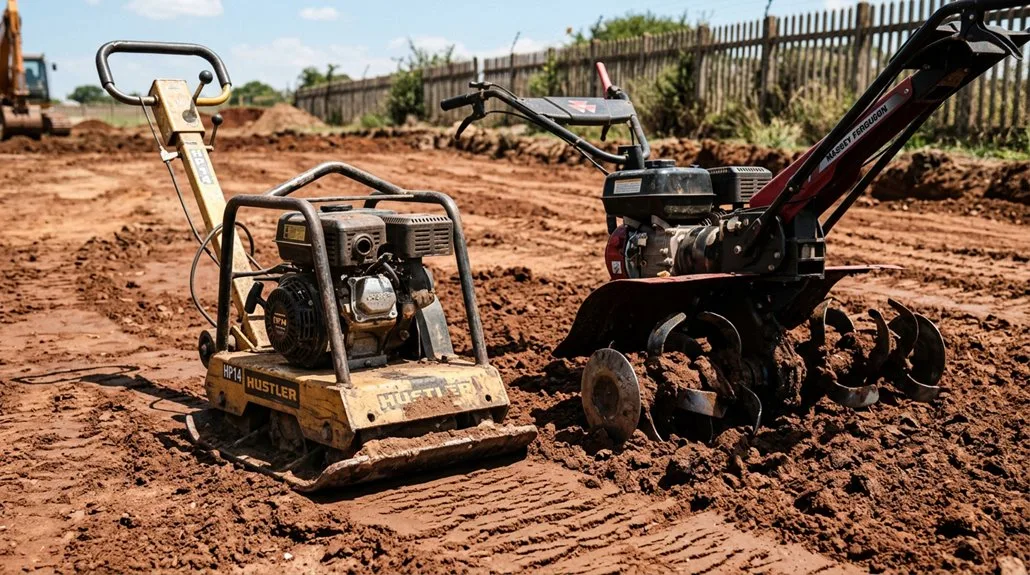
Two rollers sit on your site. Only one won’t get your project rejected.
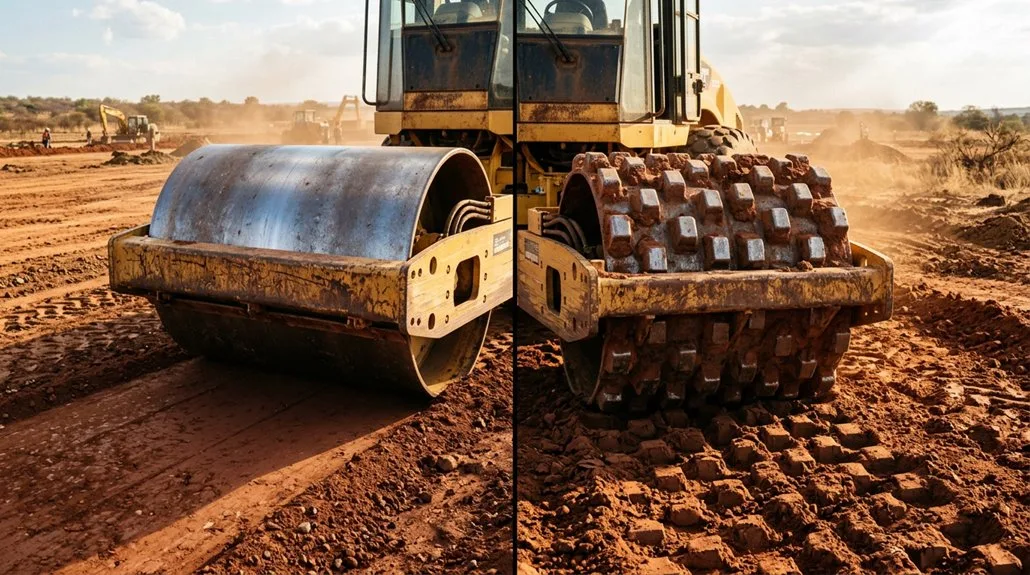
Grab the wrong compactor and that density test comes back with numbers you don’t want to see, costing you time, money, and the client’s trust. Smooth drums crush it on sand and gravel, relying on static weight and vibration to lock particles tight. Padfoot rollers dig deeper, kneading clay and silt until trapped air has nowhere left to hide.
The catch? Most crews guess instead of matching the machine to the soil. Here’s how to stop guessing.
Smooth Drum vs Padfoot Roller: What’s the Real Difference?
Why do two rollers that look so similar work so differently? The answer lies in the drum.
Smooth drum vs padfoot comes down to compaction method, not just shape.
Smooth drums use static weight and vibration. They press material evenly from above, creating a flat, uniform surface. You’ll see them finishing road base and paving layers.
Smooth drums don’t dig in—they press down evenly, leaving road base and paving layers flat and finished.
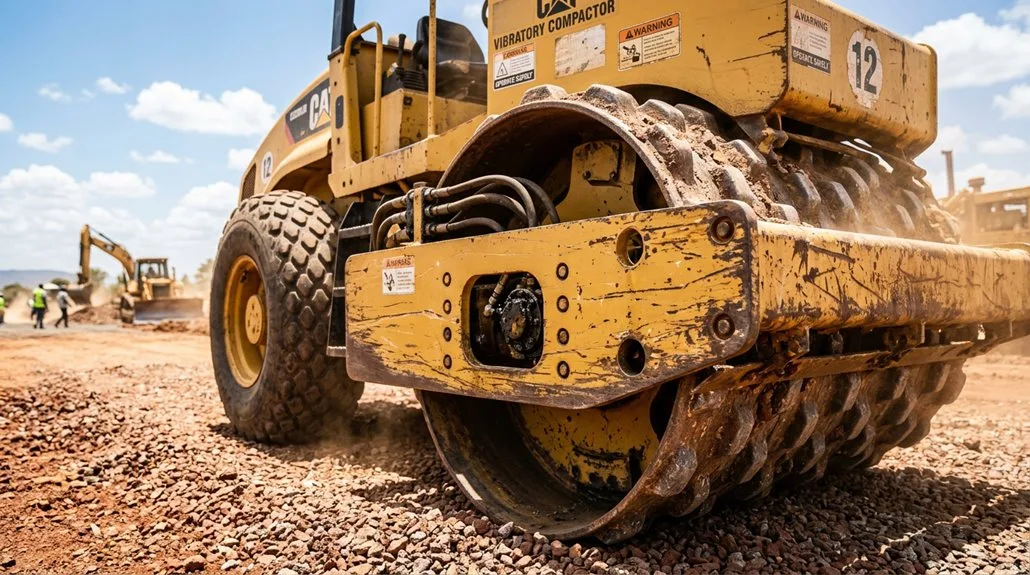
Padfoot rollers work differently. Protruding feet knead the soil, driving force downward and pushing air out from the bottom up. This penetration suits clay and silt, where deep compaction matters most.
Here’s the practical takeaway: padfoot rollers handle the rough, early work. Smooth drums finish the job. Together, they form a team—each roller doing what it does best. Local plant hire providers often stock both types within a dependable fleet of well-maintained equipment, letting you switch between machines as project needs change.
How to Match Your Roller to Sand, Gravel, or Clay
Once you know your soil type, choosing the right roller becomes straightforward. South African contractors who excel in roller equipment selection join a community of skilled operators who achieve results the first time. Sand and gravel require a smooth drum. Clay and silt require a padfoot. This table breaks it down:
| Soil Type | Best Roller | Why It Works |
|---|---|---|
| Sand/Gravel | Smooth Drum | Even pressure, flat finish |
| Crushed Rock | Smooth Drum | Granular structure needs surface pressure |
| Clay | Padfoot | Kneading action removes trapped air |
| Silt/Moist Fill | Padfoot | Pads speed moisture release |
Matching soil to roller isn’t guesswork. It’s a proven system that leads to smarter, more reliable compaction outcomes on every project. Every roller comes with experienced and certified operators who ensure the machinery performs optimally on site, regardless of the soil conditions you’re working with.
Why the Wrong Roller Fails Your Density Test
When you send a smooth drum onto wet clay, the density test won’t lie to you. The drum rides on top, air stays trapped below, and your density reading falls short of spec.
Crews on real South African sites see this mistake often, and it costs time and money.
Understanding soil compaction types matters here. Clay needs kneading action, not surface pressure. A padfoot roller pushes each pad below the surface, forcing air out and raising density where it counts.
Clay needs kneading, not pressure. Padfoot pads dig below the surface and force the air out.
The same failure happens in reverse. Run a padfoot on clean sand, and the pads punch holes instead of building density.
Matching roller to soil isn’t optional. It’s the difference between passing your test and repeating the job. If you’re unsure which drum suits your ground conditions, expert advice and support from your local hire team can steer you towards the right roller before you break ground.
Padfoot to Smooth Drum: Sequencing Your Compaction Passes
Two rollers, two jobs, one sequence. You start with padfoot on loose, cohesive fill. The pads knead deep and push out trapped air. Once the drum rises up out of the material, you’ve got your visible sign of density. That’s when smooth drum takes over.
Here’s the sequence you’re joining every crew that gets this right:
| Stage | Roller Used |
|---|---|
| 1. Loose lift, high moisture | Padfoot |
| 2. Drum rises, density builds | Padfoot |
| 3. Surface needs levelling | Smooth Drum |
| 4. Final finish, uniform pass | Smooth Drum |
Getting this sequence right relies on skilled operators who know when to switch machines. Smart roller hire means matching each stage to the right machine. Skip a step, and your density test shows it.