Your patio looks perfect on installation day. Six months later, one corner sinks two inches into the earth like it’s being swallowed whole. Your shovel bounces off garden soil as if you’re trying to dig through concrete. Neither of these disasters happened by chance—they happened because the ground underneath was never properly prepared. Two tools separate a lasting project from an expensive redo: plate compactors and tillers. They’re not interchangeable, and choosing wrong costs you time, money, and a whole lot of frustration. Here’s how to know which one your project actually demands.
Sinking Patios and Rough Soil: Common DIY Ground Problems
When you skip proper ground prep, your patio pays the price later. Sinking pavers and uneven slabs are common signs of poor base compaction. Rough soil, air pockets, and loose fill all cause settling over time.
You’re not alone in this problem—many DIYers face the same issue on their first patio project.
Here’s what typically goes wrong:
- Base material placed too thick in one lift
- Soil left too dry or too wet before compaction
- No cross-hatch passes to firm the ground evenly
For homeowners without their own equipment, plate compactor hire offers a practical solution. Renting one for a weekend project gives you professional-grade results without a long-term investment. Experienced providers offer meticulously maintained machinery so you can trust the equipment to perform reliably on your project.
Getting this step right now saves you from costly repairs later, and it helps your outdoor space hold up like the pros’ work.
Plate Compactors: What They Do to Soil and Gravel
Fixing that sinking-patio problem starts with understanding what a plate compactor actually does to the ground beneath your feet.
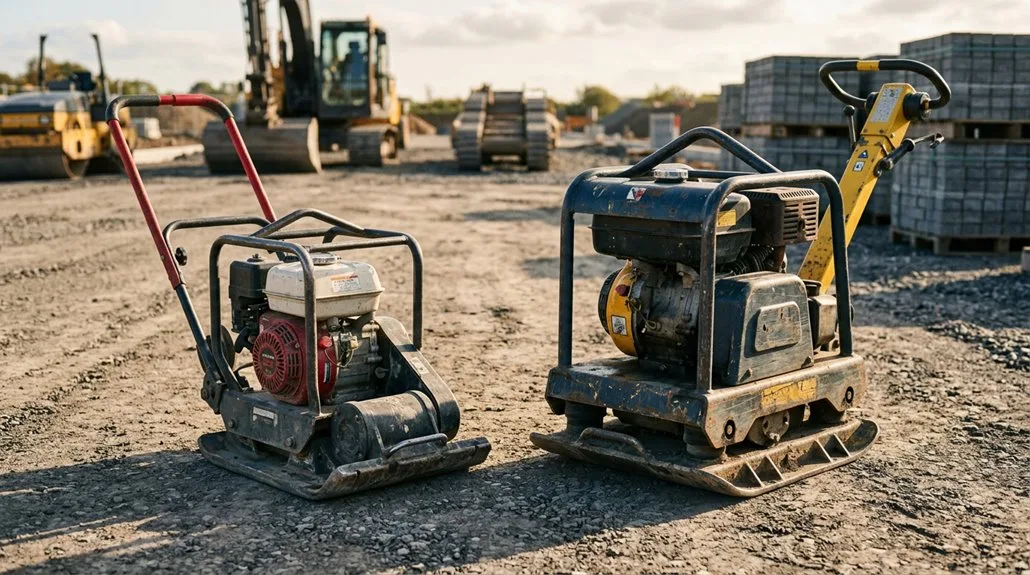
Plate compactors use vibration through a heavy steel base to shake loose particles into tighter arrangements. This process reduces air voids in soil, sand, and gravel, creating a stable base layer.
Vibration packs loose particles tight, squeezing out air pockets to turn shifting soil into a stable, solid base.
You’ll get the best results with granular materials, not heavy clay.
Here’s what matters for DIYers like you:
- Vibration densifies material, improving load-bearing strength
- Thin layers compact better than thick ones
- Three to four passes per layer is standard practice
- Overlapping, cross-hatch patterns guarantee even coverage
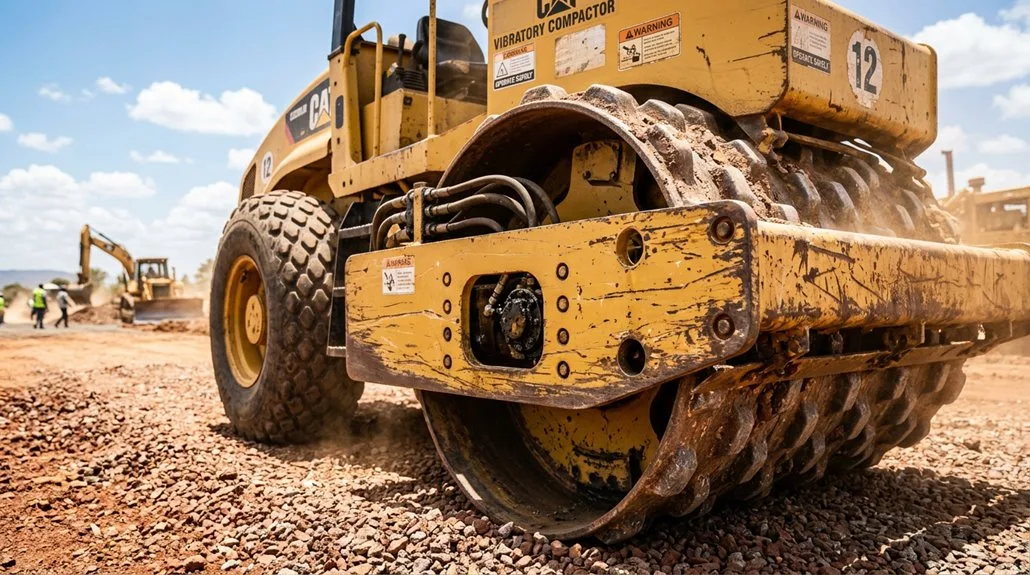
For larger areas needing heavier rollers, plant hire companies provide skilled operators who can manage that equipment safely on your behalf.
Once you understand this process, you’ll join countless DIYers who’ve solved sinking patios and unstable bases using proper compaction techniques.
Tillers: How They Loosen and Prep Garden Soil
Since a plate compactor squeezes soil particles together, a tiller does the opposite job. Tillers use rotary tines to break up compacted earth and loosen it for planting.
You’ll rely on this tool when prepping garden beds, seeding a lawn, or mixing in compost and other amendments.
Tillers give your soil the workability it needs for roots to spread. Here’s what they handle well:
- Loosening hard, compacted topsoil
- Mixing organic matter into existing soil
- Breaking up clods before seeding
- Reducing manual digging time on small plots
For DIYers building a productive garden community, a tiller is a great result-producing tool. It won’t densify anything. That’s the compactor’s job.
If you don’t own one, many providers offer a tool hire service that includes tillers along with expert advice on proper usage.
Together, both tools cover the full range of ground preparation work.
Plate Compactor vs Tiller: Which One Do You Need?
How do you know which tool your project needs? The answer depends on your goal: loosening soil or firming it up. Once you grasp this difference, you’ll join countless DIYers who pick the right tool with confidence.
- Choose a tiller when you’re loosening soil for planting, seeding, or mixing in amendments.
- Choose a plate compactor when you’re stabilising a base for pavers, patios, or concrete work.
- Consider both if your project moves from garden prep to hardscaping in stages.
Plate compactors densify granular materials like sand and gravel. Tillers prepare topsoil for growth.
If you’re unsure which equipment suits your project, skilled operators available can help you select and safely manage the right tool on-site.
Matching the tool to the material type, not just the job size, gives you a great result every time. Ask yourself what the soil needs before you start.