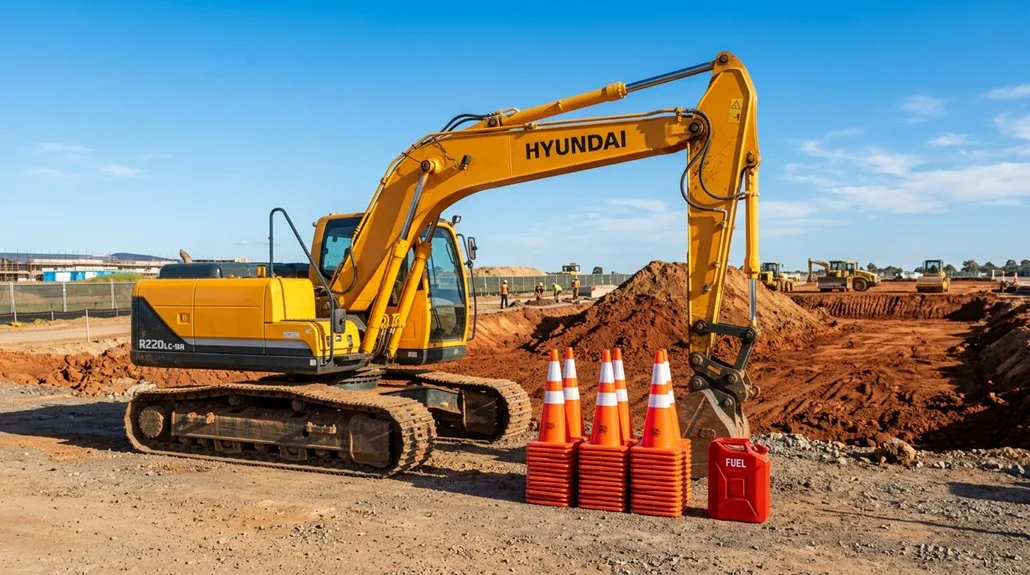
A motor grader maintaining an existing gravel road can typically cover several kilometres in a day, but building or reshaping a road is much slower because the material has to be cut, moved, watered and compacted in several passes. Road condition, material type, the number of passes and the operator’s skill all affect how long the job takes.
Below we explain grader working speeds, how to estimate the time for your road or site, and how to keep the work efficient.
Key Takeaways
- Grader time varies based on traffic volume; heavy truck usage increases grading frequency and time needed for maintenance.
- Prolonged rain leads to potholes, requiring more regular grading, thus extending the overall time for road leveling.
- Optimal grader speeds of 5-8 km/h enhance road smoothness, impacting the time taken for effective leveling.
- Poor road design may lead to quicker re-grading needs, increasing the frequency and duration of grading operations.
- Terrain assessment is crucial; encountering rocky soil or steep slopes can significantly delay the grading process.
Factors Affecting Grader Time Estimates
Regarding figuring out how long a grader takes for road leveling, you’ve got a lot more to take into account than just a simple “let’s get this done.”
There are several pesky factors that can drag out the process.
First up is traffic volume. Busy roads need grading way more often—thanks, heavy trucks.
Then there’s the weather, which knows how to ruin a good road. Prolonged rain? Potholes pop up like weeds! Proper grading and base work ensures optimal slope and elevation, which can mitigate some of these weather-related issues. Additionally, maintaining proper drainage compliance helps to prevent water pooling that could lead to further deterioration of road quality.
You might think low-traffic roads are easy peasy, but even they can surprise you after some storms.
Plus, let’s not forget road design. If it’s not built right, you’ll be back grading sooner than you want.
Understanding Grader Speeds and Gear Usage
You’ve got the basics of grading down, but what speeds do graders actually roll at?
Well, it’s not a simple answer.
Graders can cruise anywhere from 4.1 km/h to a whopping 51.7 km/h, depending on the model and gear you choose. The 24 Motor Grader is designed for wide haul roads with 535 HP and 7.3 metres moldboard, which enhances its speed and efficiency on the job site.
Graders can roll anywhere from a leisurely 4.1 km/h to an impressive 51.7 km/h, depending on model and gear.
Sure, that sounds brilliant, but go too fast on rough terrain and it’s a recipe for disaster.
Ever tried speedy grading on a bumpy road?
It’s like trying to ride a bicycle with a flat tyre—pointless!
You’ve got to switch gears; lower ones for precision and higher for flat stretches.
Just remember, speed doesn’t always mean efficiency, especially if you’re guzzling more fuel than your morning coffee.
The Importance of Terrain Assessment
While you might think you can just plough through road construction without a second thought, terrain assessment is more than a checkbox on a to-do list—it’s your road’s best friend. Seriously, skipping this step? That’s like baking a cake without checking if you have flour. You wouldn’t want to dig through rocky soil and find out you’re in a vlei.
Plus, understanding slopes and streams helps you avoid pesky surprises, like a flood washing away your hard work. Not to mention, it’s vital for keeping drivers safe. Additionally, a thorough topographical analysis ensures that the road’s design is optimized for the existing landscape. By understanding the environmental factors, you can develop risk mitigation strategies that contribute to long-term sustainability and resilience.
Maximizing Efficiency Through Proper Operations
How often do you find yourself wondering if there’s a magic formula for speeding up road grading? But you can enhance your efficiency.
First, know your grader’s sweet spot—5-8 km/h is key for a smooth finish. Too fast? You’ll leave those pesky ridges.
Adjust your blade, too; a 10 to 45-degree angle is the Goldilocks zone for cutting. Proper grading techniques involve setting the blade depth to redistribute gravel accurately. Additionally, keep in mind that 35% of US roads are unpaved, which emphasizes the importance of maintaining these surfaces effectively.
And don’t forget your cutting edge! If it’s dull, you might as well be grading with a butter knife.
Drainage is your secret weapon—keep that road surface raised in wet areas.
Finally, remember, good planning and training beat haste any day. So, roll up your sleeves, and let’s make road grading less of a headache!
Environmental Considerations in Grading Projects
When it comes to grading projects, environmental considerations can feel like a hefty afterthought, can’t they?
You fire up that big machine, and suddenly, it’s chaos.
There’s noise, dust flying around—like your favourite desert minus the scenic views.
You’ve got heavy machinery vibrating nearby, disturbing every peaceful structure around. Roads impact water resources and discharge areas, making it crucial to monitor runoff during and after grading activities.
And what about those poor wildlife creatures? Grading can mess up their homes big time.
Contaminated water from de-icing salt? That’s just a cherry on top.
Planning your grading project
Grading rarely happens on its own: most road and site jobs also need tippers to bring in gravel, a water cart and a roller to compact each layer. Our guide to tipper truck hire costs helps you budget for the material side. For background on graders and the other machines used in road building, see Wikipedia’s heavy equipment overview.
Bendet’s earthmoving team helps with farm roads, access roads and site preparation across Piet Retief and Mkhondo. See our earthmoving services or call 076 202 9021 for a quote.